Home · Services · Whole-Home Surge Protection
Whole-Home Surge Protection in Norman, OK
Quick answer
Panel protection for workstations, chargers, and heat pump boards, sold with its limits stated in plain language in Norman, shaped by university and downtown older homes, middle ranch stock, and lake side subdivisions where storm season lightning clusters, dense rental loads on older services, and fast filling panels in growth homes drive the call pattern.
Whole-Home Surge Protection in Norman starts with the local read: older homes near the university and downtown sections, ranch homes in the established middle neighborhoods, subdivision homes toward the lake and the eastern growth areas, and apartment stock near the campus and main corridors. The Canadian River side of the service area and the city's hot summers, cold winters, and severe spring storm seasons set the order of work, and the scope names that order in writing before anyone commits to a price.
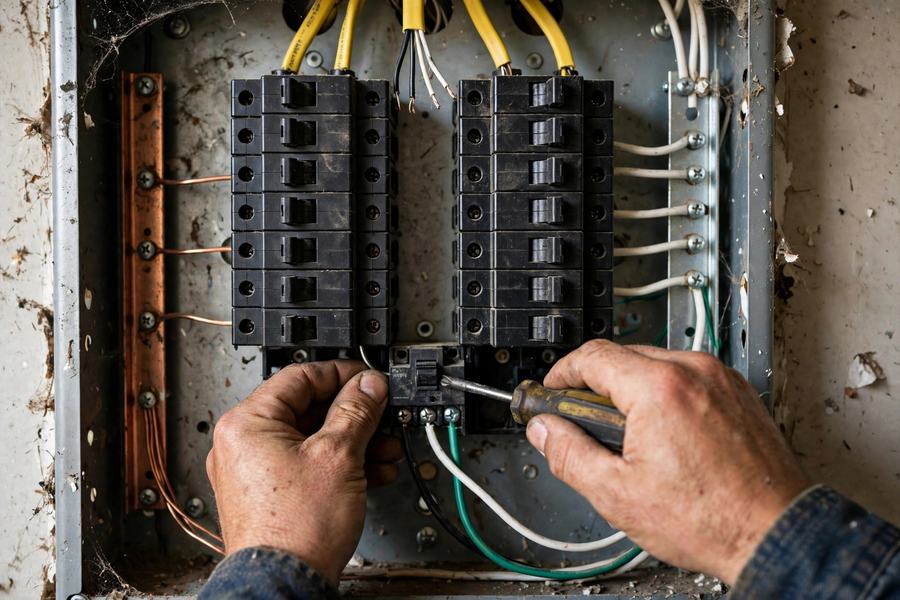
How we approach this job
Prevention economics: For whole-home surge protection in Norman, the buying situation is timing: a planned, lower-cost visit now against an emergency visit later, priced honestly against each other.
Signs you need whole-home surge protection
- A nearby lightning strike killed electronics or an appliance board. It usually means storm weeks are killing boards and appliances in clusters.
- The AC or a major appliance needed a control board after a storm. It usually means one protector at the panel defends the whole house's electronics at once.
- You are replacing a panel or a generator is being installed and want the system protected as a set. It usually means equipment that has died once is telling you its circuit's exposure.
- Frequent small outages and flickers suggest a surge active service. It usually means a surge active service is aging every board in the house slowly; the protector is the cheap half of that story.
What the job involves
What affects the price
- Scope: device, circuit, or panel, decided by testing
- Panel capacity and the load calculation for new work
- Access: attic, crawl space, or finished walls
- Permit and inspection items where the job requires them
- Whether storm or surge damage documentation is needed for a claim
When it is an emergency
A burning smell, a warm or buzzing panel, sparking, or power loss to half the house are the emergency cases: stop using the circuit and call the same day. Repeated breaker trips are the panel asking for a read before a device or a breaker fails hot.
PLACEHOLDERWhole-Home Surge Protection across the Norman area
Related services
Breaker Panel Replacement & Upgrades
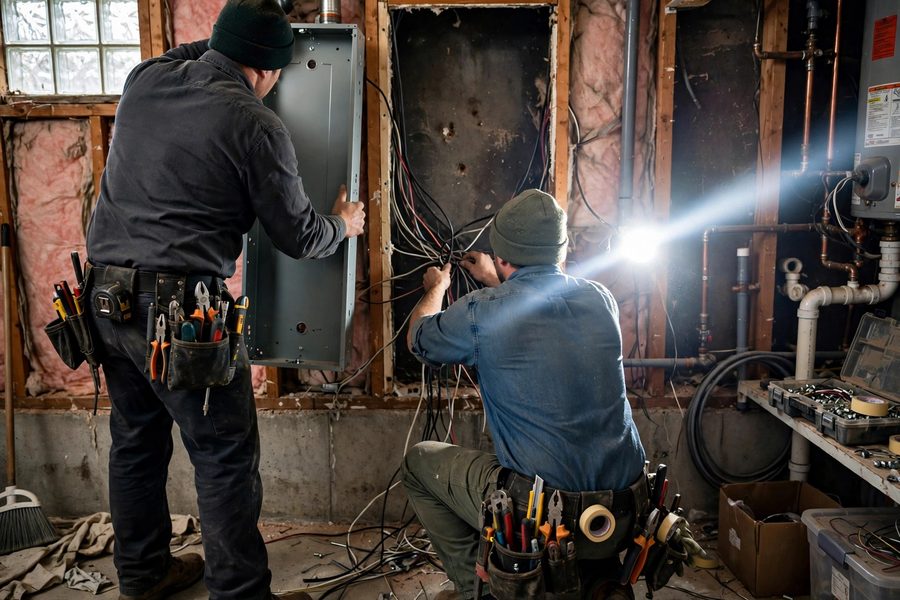
Service upgrades scoped from a load calculation that inventories the whole electrification plan, cars coming included, with permit and utility steps named in Norman, shaped by university and downtown older homes, middle ranch stock, and lake side subdivisions where storm season lightning clusters, dense rental loads on older services, and fast filling panels in growth homes drive the call pattern.
Emergency Electrical Repair
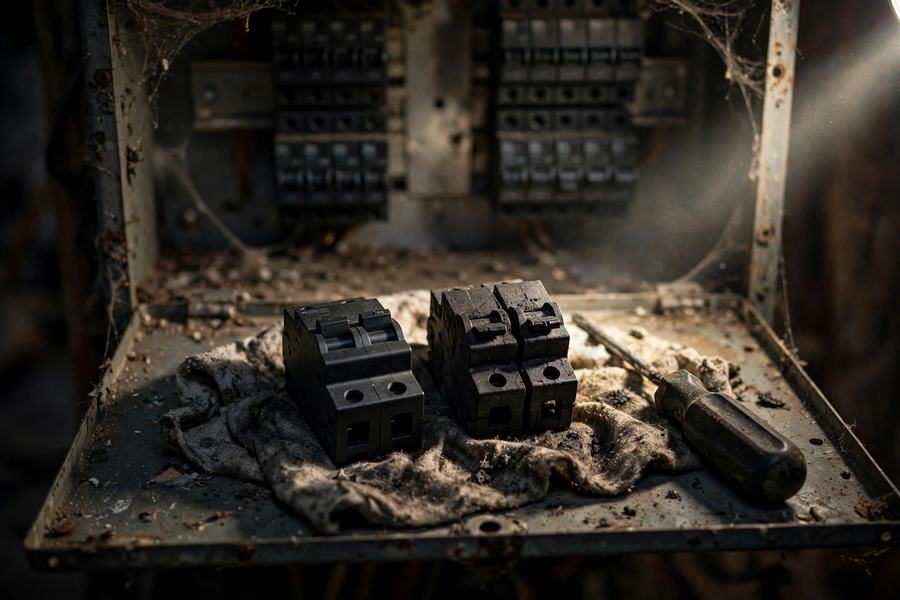
Same day triage separating a PG&E street outage from a house fault, read against panels serving the most electrified households in America in Norman, shaped by university and downtown older homes, middle ranch stock, and lake side subdivisions where storm season lightning clusters, dense rental loads on older services, and fast filling panels in growth homes drive the call pattern.
Wiring & Rewiring
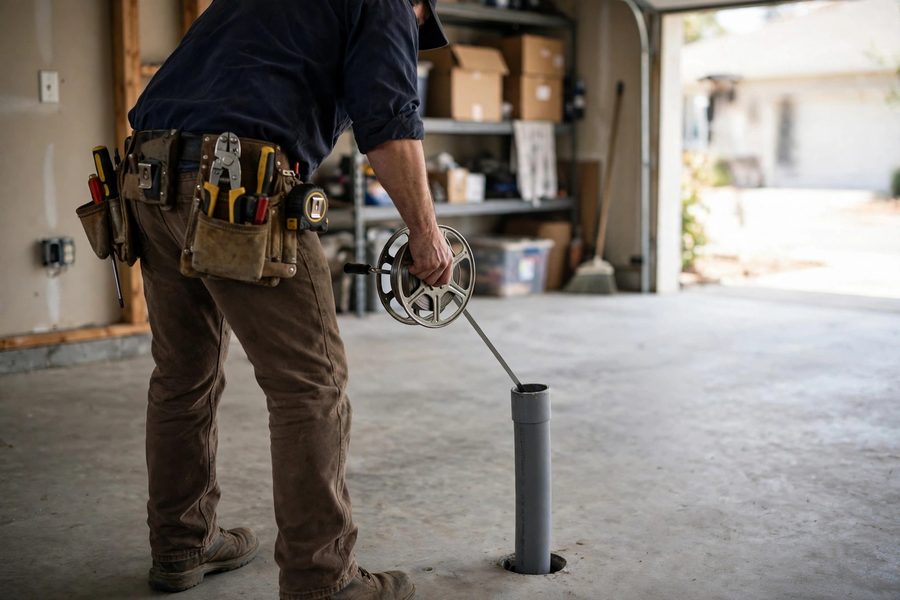
Rewiring planned around post and beam architecture and ranch additions, access named room by room because the diplomacy is half the craft in Norman, shaped by university and downtown older homes, middle ranch stock, and lake side subdivisions where storm season lightning clusters, dense rental loads on older services, and fast filling panels in growth homes drive the call pattern.
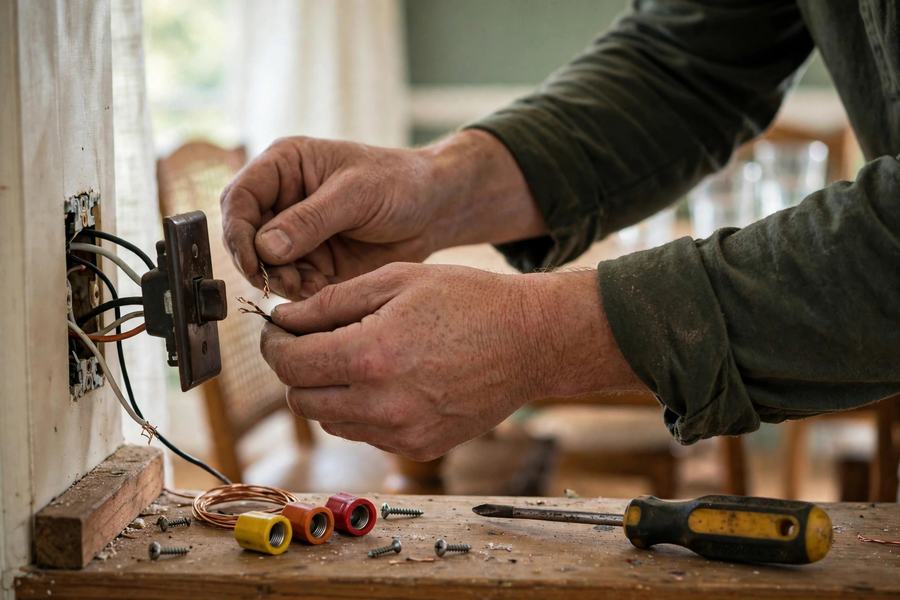
Outlet, Switch & GFCI Repair
Two prong remedies in the honest three forms, ground fault protection by tester, and home office circuits audited like wet ones in Norman, shaped by university and downtown older homes, middle ranch stock, and lake side subdivisions where storm season lightning clusters, dense rental loads on older services, and fast filling panels in growth homes drive the call pattern.
Whole-Home Surge Protection questions, answered
When is whole-home surge protection an emergency?
A burning smell, a warm or buzzing panel, sparking, or power loss to half the house are the emergency cases: stop using the circuit and call the same day. Repeated breaker trips are the panel asking for a read before a device or a breaker fails hot.
What affects the price of whole-home surge protection in Norman?
The main price factors for whole-home surge protection are covered in the cost section above. The contractor confirms the exact price in a written estimate after seeing the job, and nothing is owed until you approve it. The call and the referral are free.
What is the safe way to run a portable generator for my Norman home?
Through an interlock kit or a transfer switch, full stop. Both connect the generator to chosen circuits through the panel and mechanically prevent power from ever flowing backward onto the street, where it can injure or kill a line worker restoring your neighborhood. Published guides put the hookup at $500 to $1,500 installed depending on method and distance. The two fatal shortcuts are the dryer outlet backfeed cord and running the generator in a garage; outage season produces carbon monoxide deaths every year from the second one alone. Generator outside, 20 feet from windows, feeding an inlet: that is the whole safe pattern.
My GFCI outlet keeps tripping. Is it the outlet or something real?
Both are possible and the order of suspicion matters. A GFCI that trips with nothing plugged in and will not hold a test is often a tired device, and replacement settles it. A GFCI that trips when a specific appliance runs, or after rain at outdoor and dock locations, is reporting ground leakage from that appliance or water in a box, which is the device doing its exact job. At docks and pools, treat every trip as real until an assessment says otherwise, and keep people out of the water near a faulting circuit.
My home has aluminum wiring. Do I need to rewire the whole house?
Not automatically, and anyone who says so without opening devices is skipping the assessment. Aluminum branch wiring from the late 1960s and 1970s fails at connections, not mid-run, and the approved remedies work at the connections: devices rated for aluminum, or copper pigtails with listed connectors installed by an electrician, at a fraction of whole house rewiring. The evidence that decides is at the devices: overheated, discolored, or loose aluminum connections argue for the full remedy program; clean, tight, properly rated connections argue for a monitored plan. Get the device level findings in writing either way.
Request a callback
Prefer to talk later? Leave your details and an independent local pro will call you back. No charge to you, no obligation.
Canadian River Electric is a free referral service. Submitting this form connects you with independent local contractors who provide the work.